

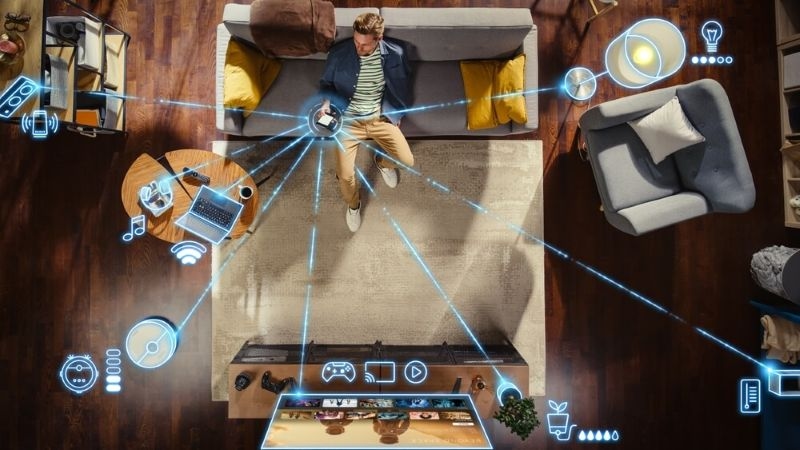
Smart living used to sound like a luxury. Now it’s closer to a default setting. Thermostats learn routines. Doorbells recognize faces. Watches nag people to stand up. Even fridges have opinions, apparently.
But the real shift is deeper than fancy gadgets. The newest Internet of Things innovations are making everyday environments more responsive, more efficient, and sometimes a little too nosy if no one is careful. IoT is no longer just “devices connected to Wi-Fi.” It’s a growing network of sensors, software, and services that can understand what’s happening in real time and respond without being asked.
The question in 2026 is not whether IoT is here. It’s whether people can use it in ways that feel helpful, safe, and worth the tradeoffs.
At its core, IoT connects physical objects to the internet so they can send and receive data. That sounds technical. In real life, it means the lights dim when a movie starts, the AC adjusts before someone gets home, and a leak sensor sends an alert before a small problem becomes a disaster.
The newest Internet of Things innovations focus less on “look what this gadget can do” and more on systems working together. People don’t want ten separate apps for ten devices. They want everything to behave like one coordinated home or workplace.
That is why smart living today is about orchestration. Scenes, routines, automations, and alerts that reduce friction instead of adding more setup work.
The best tech is the kind people barely notice. smart home technology trends in 2026 lean into that idea by prioritizing convenience, energy savings, and accessibility.
Some of the most practical shifts include:
The goal is not to make a home feel like a spaceship. It’s to make daily routines smoother. Small wins add up. Not hunting for keys because the lock logs entry. Not worrying about water damage because a sensor pings early. Not wasting power because devices power down automatically.
Most people don’t buy IoT “devices.” They buy outcomes. Security. Comfort. Convenience. Time saved. That’s why the connected devices ecosystem matters more than any single gadget.
A connected ecosystem means devices can share signals and trigger actions together. For example:
When devices work as a coordinated system, smart living feels natural. When they don’t, it becomes a pile of apps and frustration. That’s why buyers and businesses pay attention to compatibility now more than ever.
Here’s the part nobody wants to talk about while unboxing a new gadget. IoT security challenges are real, and they are not just “tech paranoia.” Every connected device can be a potential entry point if it has weak passwords, outdated firmware, or sloppy data handling.
Common risks include:
The fix is not complicated, but it does require basic habits: strong passwords, firmware updates, secure Wi-Fi, and buying from brands with long-term support. Smart living should not mean “always vulnerable.” Security has to be part of the setup, not an afterthought.
IoT isn’t only about homes. Some of the biggest impacts are happening behind the scenes in factories, logistics, utilities, and healthcare. industrial IoT applications focus on monitoring, predictive maintenance, safety, and efficiency.
Examples that show up in real operations:
These upgrades may not look flashy, but they change business outcomes. Less downtime, fewer accidents, better planning, and more consistent quality. In many industries, IoT has become a competitiveness factor, not a novelty.
Personalization is the next layer. Instead of a smart home that reacts the same way every time, IoT systems increasingly adapt to individual patterns. Not in a creepy way, ideally. In a supportive way.
Examples:
This is where IoT future predictions often point: environments that learn, anticipate, and respond with minimal input.
Still, there’s a line. People want helpful personalization, not surveillance vibes. The difference comes down to transparency and control. Users should know what is collected, why it’s collected, and how to turn it off.
One of the most frustrating things about IoT has been fragmentation. Different brands, different hubs, different apps, and a lot of “Sorry, that device isn’t compatible.”
That’s why the connected devices ecosystem conversation keeps growing. Consumers are demanding fewer silos and more shared standards. Businesses are also realizing that seamless integration increases adoption and reduces support issues.
The ideal future is a world where devices can join a network quickly, be managed centrally, and communicate securely across brands. Progress is happening, but it’s still uneven.
If IoT is going to keep expanding, trust has to keep up. The second wave of IoT security challenges is not just about hackers. It’s also about data privacy, ownership, and long-term vendor responsibility.
Questions people increasingly ask:
Smart living should not come with hidden risks. The brands that win long-term will be the ones that treat trust as a feature, not a legal disclaimer.
Looking ahead, smart living won’t stay limited to individual homes. It will extend to buildings, neighborhoods, and city services. Smart grids, adaptive street lighting, intelligent traffic systems, and public safety monitoring will continue to evolve.
That’s where the second wave of smart home technology trends connects to broader infrastructure. Homes become nodes in a larger network. Energy use becomes coordinated. Emergency response becomes faster. Accessibility improves for people with mobility or health needs.
The potential is huge. So is the responsibility to keep systems secure, transparent, and resilient.
It’s easy to overhype IoT. Not every toaster needs a Wi-Fi connection. But there are a few IoT future predictions that feel grounded and likely:
IoT is shifting from “connected” to “coordinated.” That’s the key difference.
The second mention of industrial IoT applications matters because this is where IoT’s ROI is often clearest. Businesses can measure cost savings, reduced downtime, improved safety metrics, and better asset utilization.
As sensors get cheaper and connectivity improves, IoT becomes feasible for mid-sized operations, not just massive enterprises. That democratization will keep pushing adoption forward.
And the best part is that industrial improvements often benefit consumers indirectly: fewer supply chain disruptions, better product quality, and faster service.
IoT is shaping smart living in ways that are both exciting and complicated. The convenience is real. The efficiency gains are real. The security concerns are real too. When people choose devices and systems thoughtfully, IoT can reduce daily stress and improve comfort. When they ignore security and compatibility, it can feel messy.
Smart living works best when it stays human-first: clear benefits, simple controls, and strong protections. That should be the standard.
They are new ways connected devices, sensors, and software work together to collect data and automate actions in homes, workplaces, and industries.
Weak passwords, outdated firmware, insecure networks, and unclear data practices are common risks. Regular updates and strong network security help reduce exposure.
They support real-time monitoring, predictive maintenance, safer operations, and better logistics, helping businesses reduce downtime and improve efficiency.
This content was created by AI